
December 17, 2025, Wednesday of the Third Week of Advent
Lectionary #193, Matthew 1: 1-17
Scripture
The book of the genealogy of Jesus Christ, the son of David, the son of Abraham.
Abraham became the father of Isaac, Isaac the father of Jacob, Jacob the father of Judah and his brothers. Judah became the father of Perez and Zerah, whose mother was Tamar. Perez became the father of Hezron, Hezron the father of Ram, Ram the father of Amminadab. Amminadab became the father of Nahshon, Nahshon the father of Salmon, Salmon the father of Boaz, whose mother was Rahab. Boaz became the father of Obed, whose mother was Ruth. Obed became the father of Jesse, Jesse the father of David, the king.
David became the father of Solomon, whose mother had been the wife of Uriah. Solomon became the father of Rehoboam, Rehoboam the father of Abijah, Abijah the father of Asaph. Asaph became the father of Jehoshaphat, Jehoshaphat the father of Joram, Joram the father of Uzziah. Uzziah became the father of Jotham, Jotham the father of Ahaz, Ahaz the father of Hezekiah. Hezekiah became the father of Manasseh, Manasseh the father of Amos, Amos the father of Josiah. Josiah became the father of Jechoniah and his brothers at the time of the Babylonian exile.
After the Babylonian exile, Jechoniah became the father of Shealtiel, Shealtiel the father of Zerubbabel, Zerubbabel the father of Abiud. Abiud became the father of Eliakim, Eliakim the father of Azor, Azor the father of Zadok. Zadok became the father of Achim, Achim the father of Eliud, Eliud the father of Eleazar. Eleazar became the father of Matthan, Matthan the father of Jacob, Jacob the father of Joseph, the husband of Mary. Of her was born Jesus who is called the Christ.
Thus the total number of generations from Abraham to David is fourteen generations; from David to the Babylonian exile, fourteen generations; from the Babylonian exile to the Christ, fourteen generations.
Reflection
The first word of Matthew’s gospel is the Greek for “book”, the Book of the genealogy of Jesus Christ. Then comes the long series of strange names to which people in the pews respond with mild exasperation during the season of Advent. Genealogies were essential to the ancient peoples of the Near East. They were identity papers which provided proof of Jewishness and of belonging to the people of God.
Matthew wrote his gospel with a simple purpose in mind: he wanted to show that the Christ whose works and ministry he was about to describe is really the promised Messiah, the One foretold from of old by the prophets. By compiling this list of forebears of the Lord, he intends to demonstrate that the Messiah’s roots extend back into Old Testament history, and He is, by this identifying list, the One who is to come.
Matthew’s genealogy does not set out to provide Christ with a perfect family tree from the perspective of morals or religion. These four women are not excluded solely because they are foreigners (Ruth and Rahab) or sinners, but rather due to the sympathy of popular tradition. They are here in their role of women, or more specifically, of mothers of some of the ancestors of the Messiah.
There are a few particularities of the genealogy that make it special. One of these is the presence of four women. There was Tamar (Genesis 38: 6) whose conduct went beyond the law but who acted according to her own lights. In this, she manifested her submission to God’s general design concerning her people. Even Judah, with whom she had sinned recognized her righteousness: “She is more in the right than I”, he said (Genesis 38: 26).
Rahab (Joshua 2: 1-21) is the second woman mentioned in the genealogy. She was the Jericho prostitute who helped the Hebrew spies infiltrate the Promised Land. She did everything in her power to help fulfill the plan of the Almighty about the destiny of Israel. The Jews of Jesus’ time, as well as the early Christians themselves, held her in veneration and viewed her conduct as motivated by faith (see Hebrews 11:31).
Ruth was a Moabite, a nation hated by the Israelites but she is represented by Matthew as faithful to her vocation of ancestress of the Messiah (see 1 Chronicles 2: 12; Ruth 4: 21).
Bathsheba is not named in the genealogy but referred to as “the wife of Uriah”. It isn’t as accomplice in David’s sin that she is introduced into the genealogy, but only since she assured David a royal progeny, Solomon (2 Samuel 11: 11-12).
The genealogy gives us a clue to the type of Savior Jesus is to become. Decidedly, the genealogy is not aglow with saints nor arrayed with heroes. As in most family trees, there are the rakes and the righteous, saints and sinners. The genealogy presents us with a Messiah who is sinless but born into our world of sin. The presence of the foreign women Ruth and Rahab lends a universal character to the genealogy, broadening the Messiah’s mission to encompass all nations and peoples.
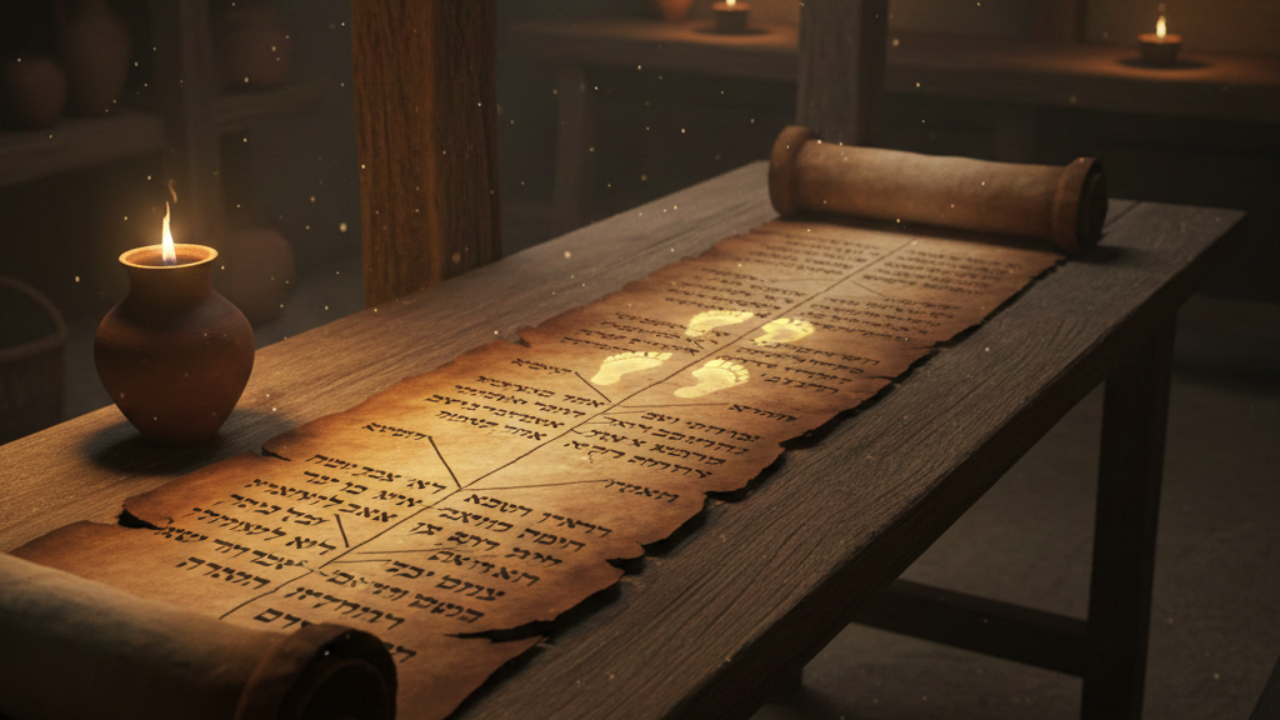
Another, more evident characteristic is the persistent and almost rhythmic recurrence of the expression “was the father of.” This incessant repetition of the exact words in nearly every verse conveys a solemn sign, a clear indication of the Lord’s resolute presence to his people throughout the centuries. The verbal drumbeat, like divine footsteps marching through the years, reflects the Lord’s loving fidelity to the “darling” Israel (Isaiah).
The apparition of Mary at La Salette signals the vital role that women played, as well as the esteem they have always enjoyed in the heart of the Creator. Once more, God sent a woman to play a part in the happiness and the welfare of humankind. La Salette speaks of God’s constant presence to his people. At Bethlehem, she brought the Son of God to the world. At La Salette, the Word’s concern and continuous love for “all my people.”
La Salette Invocation
Our Lady of La Salette, reconciler of sinners,
pray without ceasing for us who have recourse to you.