
December 15, 2025, Monday of the Third Week of Advent
Lectionary #187, Matthew 21: 23-27
Scripture
When Jesus had come into the temple area, the chief priests and the elders of the people approached him
as he was teaching and said, “By what authority are you doing these things? And who gave you this authority?” Jesus said to them in reply, “I shall ask you one question, and if you answer it for me, then I shall tell you by what authority I do these things. Where was John’s baptism from? Was it of heavenly or of human origin?”
They discussed this among themselves and said, “If we say ‘of heavenly origin,’ he will say to us, ‘Then why did you not believe him?’ But if we say, ‘of human origin,’ we fear the crowd, for they all regard John as a prophet.” So they said to Jesus in reply, “We do not know.” He himself said to them, “Neither shall I tell you by what authority I do these things.”
Reflection
This is not the New Testament’s most quoted passage. It is a discussion between Jesus and Jewish authorities, and discussions, especially discussions on abstract topics, do not make for page-turning copy. Jesus had evicted the money changers from the temple, and understandably, the Jewish rabbis wanted to know by what authority He could do this, by what authority He could teach the doctrine of God.
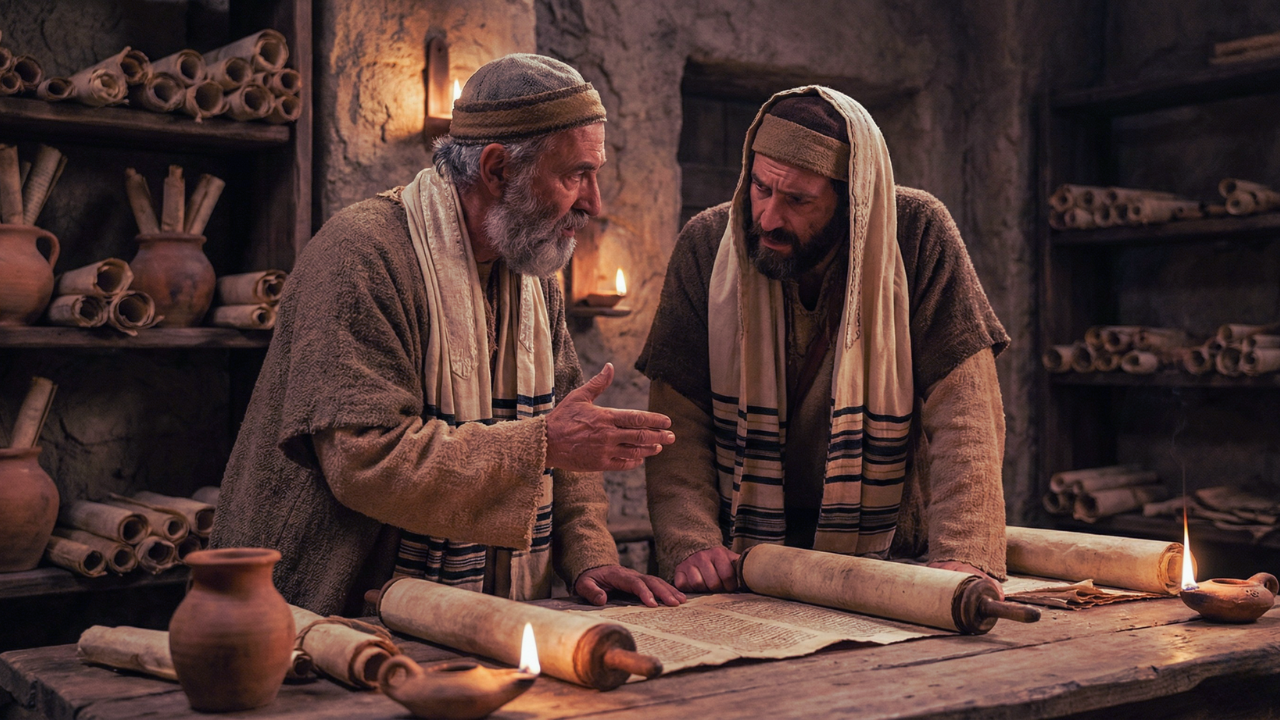
Rabbinical discussions were often conducted not in a question-and-answer format, but in a question-and-question style. In reply to a question came another question. The Jews asked Jesus, “By what authority are you doing these things, and who gave you this authority?” Jesus answers with a question of His own, “I will also ask you one question… Did the baptism of John come from heaven, or was it of human origin?” They conferred with one another on this and saw that if they admitted John’s baptism as coming from heaven, then Jesus would ask them why they didn’t believe in John’s baptism.
If they said that John’s baptism was from earth, they risked the anger of the crowds who had John the Baptist in high regard. “So they answered Jesus, We do not know.' And he said to them,Neither will I tell you by what authority I am doing these things.” As John P. Meier writes in his book The Vision of Matthew, “The leaders cannot say because of ignorance; Jesus chooses not to say, because his teaching authority is superior to these incompetents.”
Jesus did not claim authority for himself. There was no question here of authority acquired based on personality, knowledge, intelligence, or quality of character. The problem originated from where Christ derived his authority to speak and teach as he did. Who gave him this authority? Matthew is not only writing for distant posterity but also for his own church, whose members were locked in a struggle over authority with the Jews of their time and place. This declaration from Matthew in the words of Christ must have come to them as a welcome buttress and affirmation.
Ultimately, it comes down to confidence. Authority gives credence to what a person says and does. For those who read Matthew today, Christ’s authority strengthens our faith in His sayings about the Kingdom, His Father, charity, mutual respect, love, and especially in God’s constant and gracious love for everyone.
At La Salette, Our Lady spoke in the name of her Son. She clearly did not speak on her own authority. She reminds people of the Mass, the day, Sunday, reserved for the Lord, penance, prayer, and respect and honor for the Name of her Son. These are all God-centered commandments, and the Lady speaks them on the authority of her Son. She mentions this `Son’ repeatedly throughout the apparition, so that there is no doubt about the origin of her message.
She spoke in his name and sent two children, two unlikely messengers with an authority of their own, to say what she had spoken, as she herself had received from her Son the authority to speak of the Word.
At the close of Matthew’s gospel, Christ said: “All authority in heaven and on earth has been given to me. Go therefore and make disciples of all nations…” At La Salette, Mary’s farewell to Maximin and Mélanie has a similar ring: “Well, my children, you will make this known to all my people.”
Of course, the second does not have the authority of the first, but both are inspired by the same love lavished on the whole world.
La Salette Invocation
Our Lady of La Salette, reconciler of sinners,
pray without ceasing for us who have recourse to you.